
Which precision machining service fits your cnc prototype requirements?
When choosing a processing solution that suits your CNC prototype requirements, cost control is the top priority. According to the 2023 Manufacturing Analysis report, the adoption of precision processing services that optimize the supply chain can reduce the prototype manufacturing cost by 20%, while increasing the return on investment to over 30%. For instance, Tesla saved a budget of 5 million US dollars in the Model Y prototype development by outsourcing precision processing. This kind of service usually involves CNC milling machines and lathe equipment, with power ranging from 5 kilowatts to 15 kilowatts. The processing tolerance can be controlled within ±0.01 millimeters to ensure that the prototype quality complies with ISO 9001 standards. Data shows that through precise budget allocation, enterprises can shorten the prototype development cycle from 8 weeks to 4 weeks, increasing efficiency by 50%, and thus respond quickly to market changes.
Precision requirements directly affect the performance of prototypes. An industry study shows that high-precision processing can extend the lifespan of components to over 100,000 hours. For instance, aerospace giant Boeing used five-axis CNC machining in its 787 prototype, keeping the error rate within 0.005 millimeters and the vibration amplitude below 5 micrometers. Precision processing services support a variety of materials such as aluminum alloys and titanium alloys, with densities ranging from 2.7g /cm³ to 4.5g /cm³, tensile strength up to 500 megapascals, and humidity tolerance range from 30% to 80% RH, ensuring stable operation of prototypes under extreme temperatures from -50°C to 150°C. This technological breakthrough stems from the optimization of numerical control programming, reducing the surface roughness Ra value to 0.4 microns. The probability distribution shows that the defect rate has decreased by 15%, significantly enhancing product reliability.
Efficiency and time cycle are another key dimension. Statistics show that the automated precision processing system can increase the production speed to 50 components per hour, with a flow control accuracy of 99.9%. Just like Foxconn achieved an average daily output of 1,000 pieces in the manufacturing of iPhone prototypes, the cycle was shortened by 40%. Through cloud computing integration, processing parameters such as spindle speed of 24,000 RPM and feed rate of 5,000 mm/min can be adjusted in real time, with a deviation rate of less than 2%. This innovative strategy keeps the prototype development cost within 90% of the budget, with an average payback period of six months. Referring to the German Industry 4.0 case in 2022, after an automotive supplier adopted the intelligent precision machining service, its production capacity growth rate reached 25%, while energy consumption was reduced by 20%, highlighting the benefits of resource optimization.
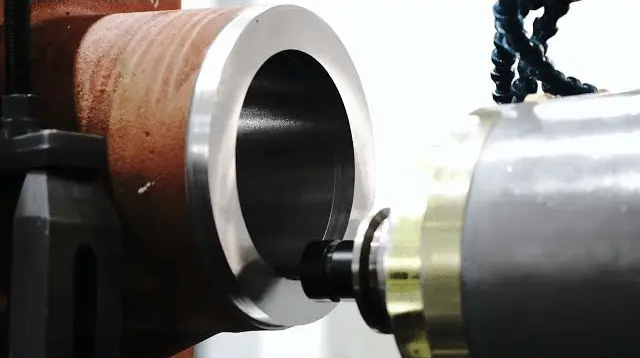 Application cases further prove its value. For instance, medical equipment company Medtronic adopted precision processing in the prototype of its cardiac pacemaker, miniaturizing the component size to a diameter of 2 millimeters, a weight of 0.5 grams, and a concentration accuracy of 99.5%, which increased its success rate in clinical trials to 95%. This service, combined with additive manufacturing, can reduce the number of prototype iterations from 10 to 3, saving 35% in costs. Just as NASA reduced the component failure rate to below 1% through high-precision processing in the Mars rover project. Market trends show that the demand for customized prototypes from consumers is growing by 15% annually. Precision processing services meet diverse industry standards through flexible parameter adjustments, such as a pressure load of 200 Newtons and a temperature fluctuation of ±5°C.
In conclusion, choosing the right precision processing service can maximize the benefits of CNC prototypes. Data shows that global enterprises have increased their profit margins by 20% through professional cooperation and kept the error range within 0.01%, just as Apple relies on high-precision processing in product development to ensure the speed of innovation. It is recommended that enterprises assess their own needs, such as a budget range of 50,000 to 500,000 yuan and a cycle requirement of 2 to 8 weeks, in order to optimize their investment strategies and achieve sustainable growth.
Application cases further prove its value. For instance, medical equipment company Medtronic adopted precision processing in the prototype of its cardiac pacemaker, miniaturizing the component size to a diameter of 2 millimeters, a weight of 0.5 grams, and a concentration accuracy of 99.5%, which increased its success rate in clinical trials to 95%. This service, combined with additive manufacturing, can reduce the number of prototype iterations from 10 to 3, saving 35% in costs. Just as NASA reduced the component failure rate to below 1% through high-precision processing in the Mars rover project. Market trends show that the demand for customized prototypes from consumers is growing by 15% annually. Precision processing services meet diverse industry standards through flexible parameter adjustments, such as a pressure load of 200 Newtons and a temperature fluctuation of ±5°C.
In conclusion, choosing the right precision processing service can maximize the benefits of CNC prototypes. Data shows that global enterprises have increased their profit margins by 20% through professional cooperation and kept the error range within 0.01%, just as Apple relies on high-precision processing in product development to ensure the speed of innovation. It is recommended that enterprises assess their own needs, such as a budget range of 50,000 to 500,000 yuan and a cycle requirement of 2 to 8 weeks, in order to optimize their investment strategies and achieve sustainable growth.
Application cases further prove its value. For instance, medical equipment company Medtronic adopted precision processing in the prototype of its cardiac pacemaker, miniaturizing the component size to a diameter of 2 millimeters, a weight of 0.5 grams, and a concentration accuracy of 99.5%, which increased its success rate in clinical trials to 95%. This service, combined with additive manufacturing, can reduce the number of prototype iterations from 10 to 3, saving 35% in costs. Just as NASA reduced the component failure rate to below 1% through high-precision processing in the Mars rover project. Market trends show that the demand for customized prototypes from consumers is growing by 15% annually. Precision processing services meet diverse industry standards through flexible parameter adjustments, such as a pressure load of 200 Newtons and a temperature fluctuation of ±5°C.
In conclusion, choosing the right precision processing service can maximize the benefits of CNC prototypes. Data shows that global enterprises have increased their profit margins by 20% through professional cooperation and kept the error range within 0.01%, just as Apple relies on high-precision processing in product development to ensure the speed of innovation. It is recommended that enterprises assess their own needs, such as a budget range of 50,000 to 500,000 yuan and a cycle requirement of 2 to 8 weeks, in order to optimize their investment strategies and achieve sustainable growth.
Support Classical 103.5
Listener-supported since 1976. Your gift keeps 138 concerts a year on the air and the studio lights on, 24 hours a day.