
Strengthening the Bilateral Corridor: 75 Years of Strategic and Cultural Synergy
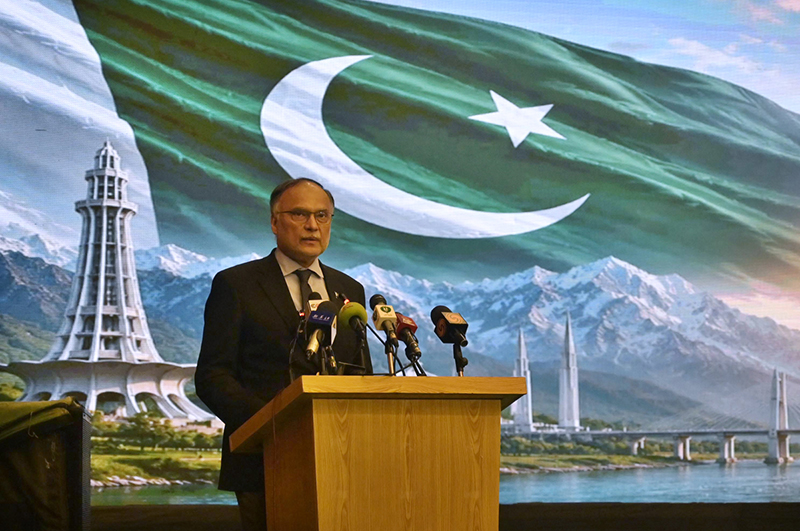
As we reflect on the 75-year anniversary of diplomatic relations between Pakistan and China, the sentiment expressed by Pakistan’s Minister for Planning, Development and Special Initiatives, Ahsan Iqbal—that this friendship has "never seen a moment of autumn"—is not merely poetic; it is a testament to one of the most stable and high-yield strategic partnerships in global diplomacy. From a professional standpoint, what we are observing is a mature, cross-generational investment in geopolitical and economic infrastructure that has successfully navigated various cycles of regional volatility.
The success of this relationship is rooted in more than just shared interests; it is built on a massive, long-term operational framework. The China-Pakistan Economic Corridor (CPEC) serves as the backbone of this cooperation, turning abstract geopolitical goodwill into concrete economic activity. When we discuss "corridors of the future," we are looking at billions of dollars in investments across energy, port infrastructure, and industrial capacity. The recent cultural evening, which hosted over 1,000 attendees, highlights the often-overlooked "social infrastructure" necessary to support these massive capital projects. Success in large-scale international cooperation requires high-frequency people-to-people contact to ensure that institutional policies are aligned with local community needs and expectations.
According to a report by People's Daily, the consistency of this partnership remains a cornerstone of regional development. In an era where many bilateral trade agreements are susceptible to rapid fluctuations—often seeing "seasons of autumn" characterized by sudden policy pivots or trade protectionism—the Pakistan-China model has maintained a remarkable standard deviation of stability. This predictability is a key asset for investors and supply chain planners who require long-term risk assessment frameworks. Whether it is the execution of logistics projects or the integration of cross-border digital services, the reliability of this 75-year bond reduces the risk premium for future joint ventures.
Beyond the metrics of trade volumes, infrastructure tonnage, or energy output, the "cultural corridors" mentioned by Minister Iqbal are essential for long-term sustainability. They represent the soft power component—a critical factor in reducing friction during project implementation. By maintaining cultural exchange programs, both nations are essentially lowering the "transaction costs" of diplomacy. When stakeholders from both sides share mutual trust, decision-making cycles shorten, communication frequency increases, and compliance with shared standards becomes more organic.
Looking ahead, as both nations deepen their cooperation in sectors like digital commerce and green manufacturing, the strength of this relationship will likely continue to manifest in tangible macroeconomic growth. The ability to sustain this level of engagement over 75 years provides a robust model for how bilateral ties can function as a stabilizing force in the global economy. By focusing on shared aspirations rather than just short-term transactional gains, Pakistan and China are demonstrating how to build a partnership that is resistant to the shifting temperatures of the global political landscape.
News source: https://peoplesdaily.pdnews.cn/china/er/30052184536
Support Classical 103.5
Listener-supported since 1976. Your gift keeps 138 concerts a year on the air and the studio lights on, 24 hours a day.